
Education Services
Since 1977, we have been actively engaged in the field of education and global development, catering to learners who are Deaf, Deafblind, and Multiple Disabilities with Vision Impairment.
Our approach to education for children and youth with Deafblindness / Multiple Disabilities with Vision Impairment is highly personalised, recognising that they have limited channels for learning. We design individualised programs for each learner, addressing their unique ways of learning and interests.
Personalised learning is at the core of our approach, ensuring that we support the specific needs of every student, regardless of where they are on their educational journey. Our dedicated special educators make every effort to help learners become personally adequate, socially competent, and economically independent, leading to improved quality of life and increased happiness.
Our education services for children with Multiple Disabilities, including Deafblindness, encompass both academic and functional curriculum, including expanded core curriculum. Our ultimate goal is to facilitate each student’s successful transition to adulthood while promoting inclusion.
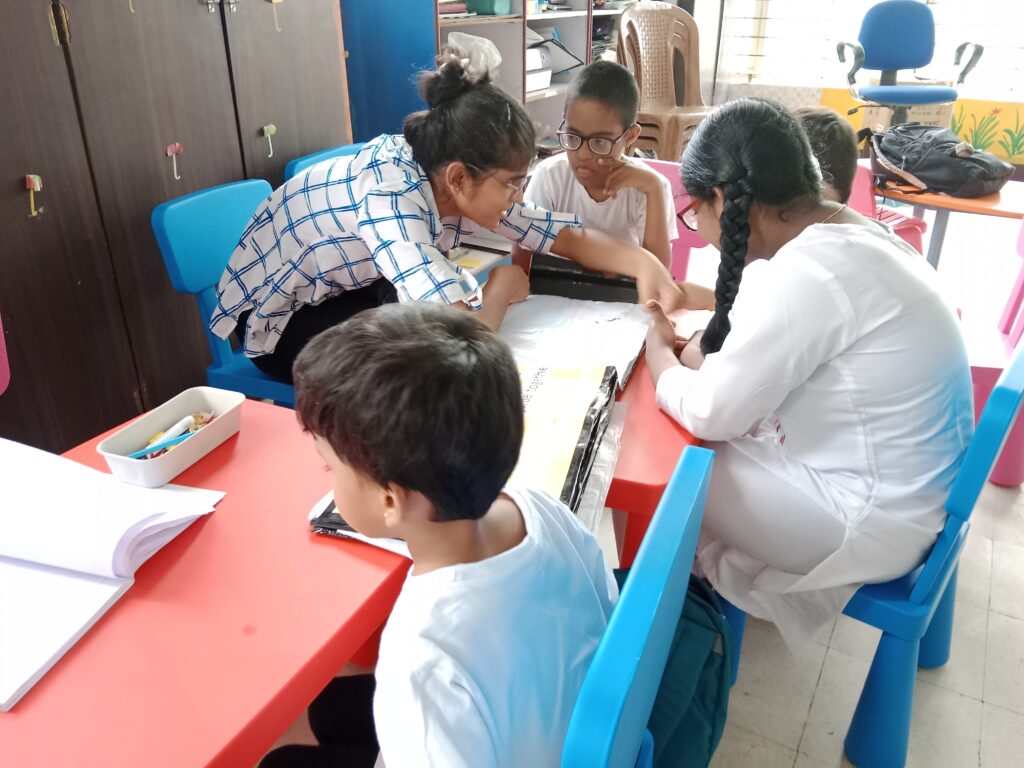
Academic Curriculum
We ensure that our students have the opportunity to pursue regular academic areas, similar to their non-disabled peers in mainstream schools.
The academic subjects are taught to the student as prescribed in the mainstream curriculum with need-based curriculum adaptations and support, if the child is ready and the learning is relevant for him to interact with the world around him, especially in his social relationships with peers. The Academic Curriculum includes categories such as reading, writing, mathematics, science, social studies, physical education, music, arts, and pottery.
Functional Curriculum
The functional curriculum focuses on helping our students learn and understand the world around them. It emphasizes interaction with the world, facilitating their engagement and participation. It teaches skills that others learn incidentally in a systematic way.
It also takes into account the student’s current and future individual needs and is designed to meet those needs holistically. It teaches skills that promote Independence and Interdependence.
The Functional Curriculum includes areas such as
- Independent living activities
- Work
- Recreation and Leisure
- Community
- Functional Academic
- Communication
Expanded Core Curriculum
Accomplishments and joys such as shopping, dining, attending and participating in recreational activities area right, not a privilege for persons who are visually impaired with or without additional disabilities.
Hence ECC plays a crucial role in:
- Providing equal access to education and opportunities for students with visual impairments.
- Fostering independence, life skills, and self-advocacy.
- Supporting different learning styles and needs.
- Enhancing academic success through foundational skills development.
ECC is the body of knowledge and skills that are needed by students with Multiple Disabilities including deafblindness, due to their unique disability-specific needs. We implement ECC through a wide range of activities and environments for every child by removing physical barriers and offering multiple ways to promote learning and development and make their life a lot happier.
Every student with Deafblindness/ Multiple Disabilities with Vision Impairment has an Individualised Educational Program (IEP) as they need specialised instruction to progress and excel in all settings.
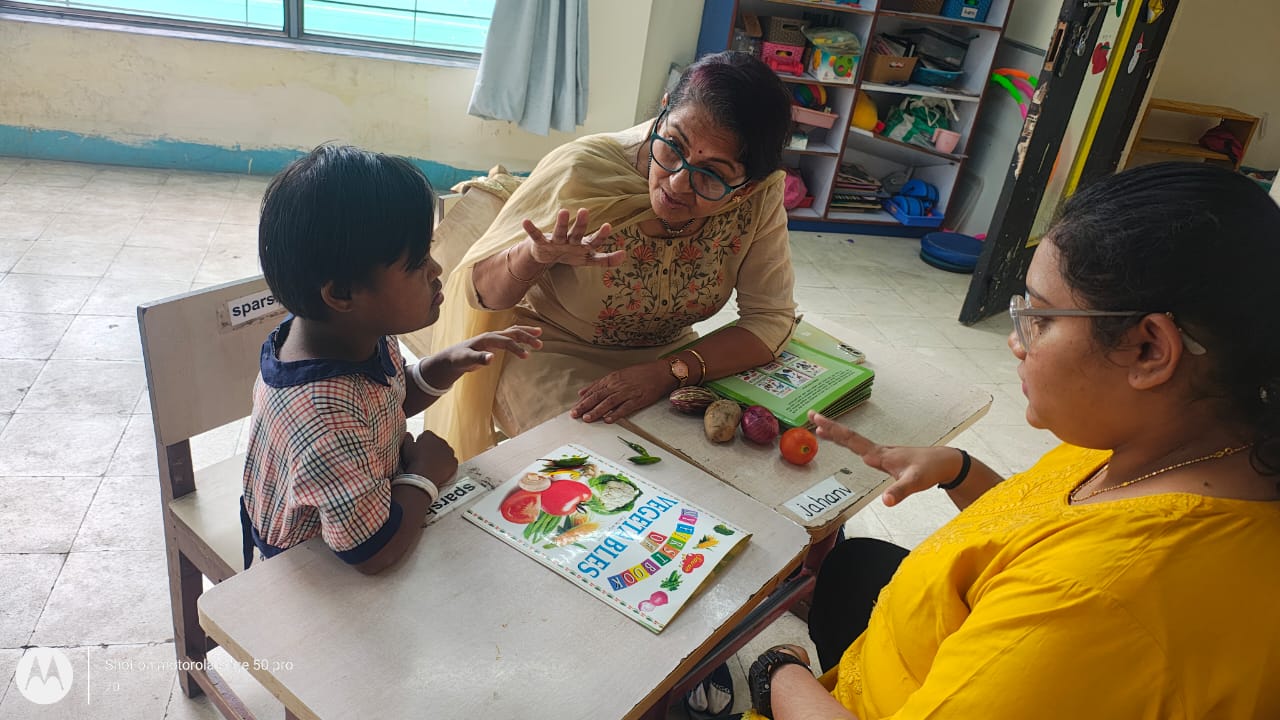
IEP is a written education plan that describes the special education and related services a child will receive, based on his/her individual strengths and needs.
- The IEP serves as a planned pathway through which educators, parents, therapists, and the team collaboratively support the child to become self-reliant and independent.
- It encompasses goals covering all areas of development, ensuring need-based education for children with Deafblindness/MDVI. Our dedicated special educators prioritise relevant areas based on the needs, age, educational priorities, and potential of the child.
- Additionally, the IEP specifies instructional strategies that consider the child’s interests and likes, preferred mode of learning, pace and speed of learning, and any limitations due to associated problems, including motor difficulties. In essence, it serves as a comprehensive program for the child, implemented over a specific period of time.
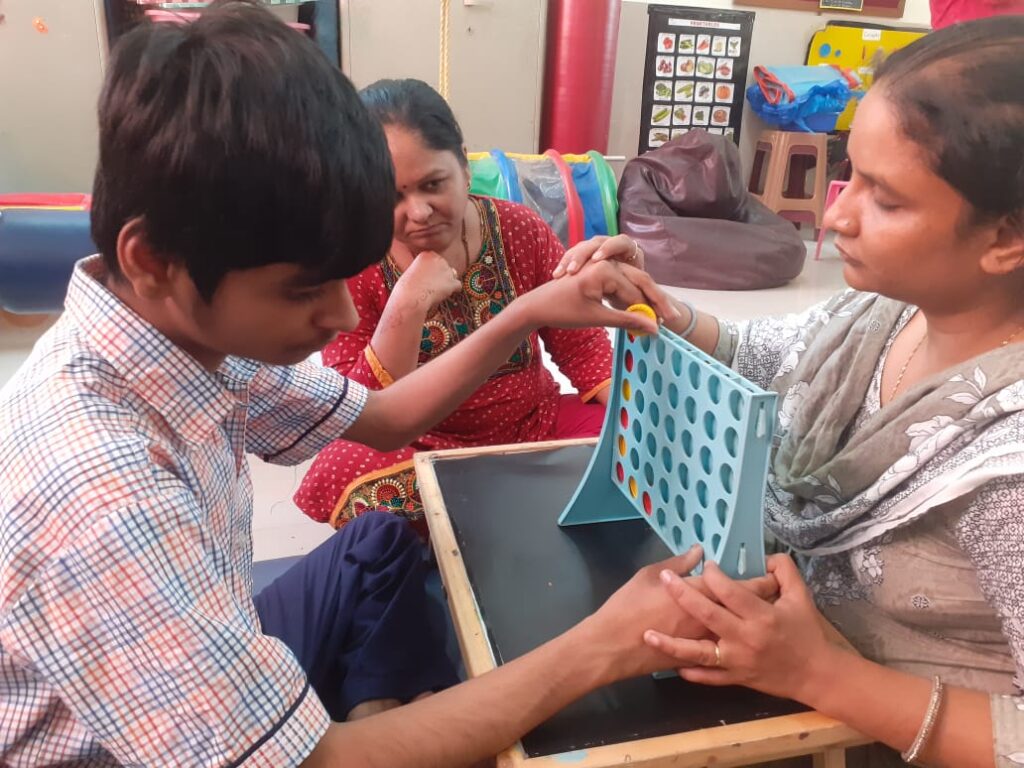
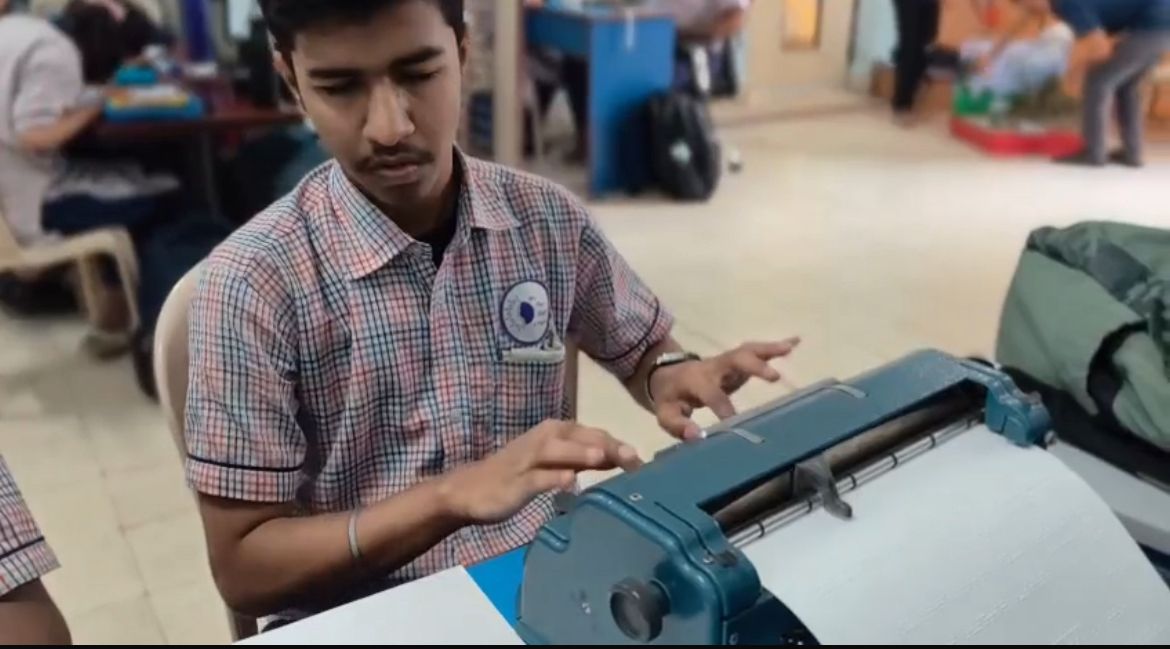
For students with hearing impairment, education spans from kindergarten to Std. X, covering ages 3 to 18 years. The curriculum adheres to the Maharashtra S.S.C. (Secondary School Certificate) Board, and instruction is provided in Hindi, Marathi, and English. Subjects such as baking, computer education, and pottery are also integrated into the modified curriculum.
Over time, our services have expanded to cater to a larger number of beneficiaries, broadening our reach and impact. In addition to focusing on academics and functional academics, we also incorporate training in self-determination, self-advocacy, and essential social skills to promote inclusion.